 Monique MongeAuthor & storyteller
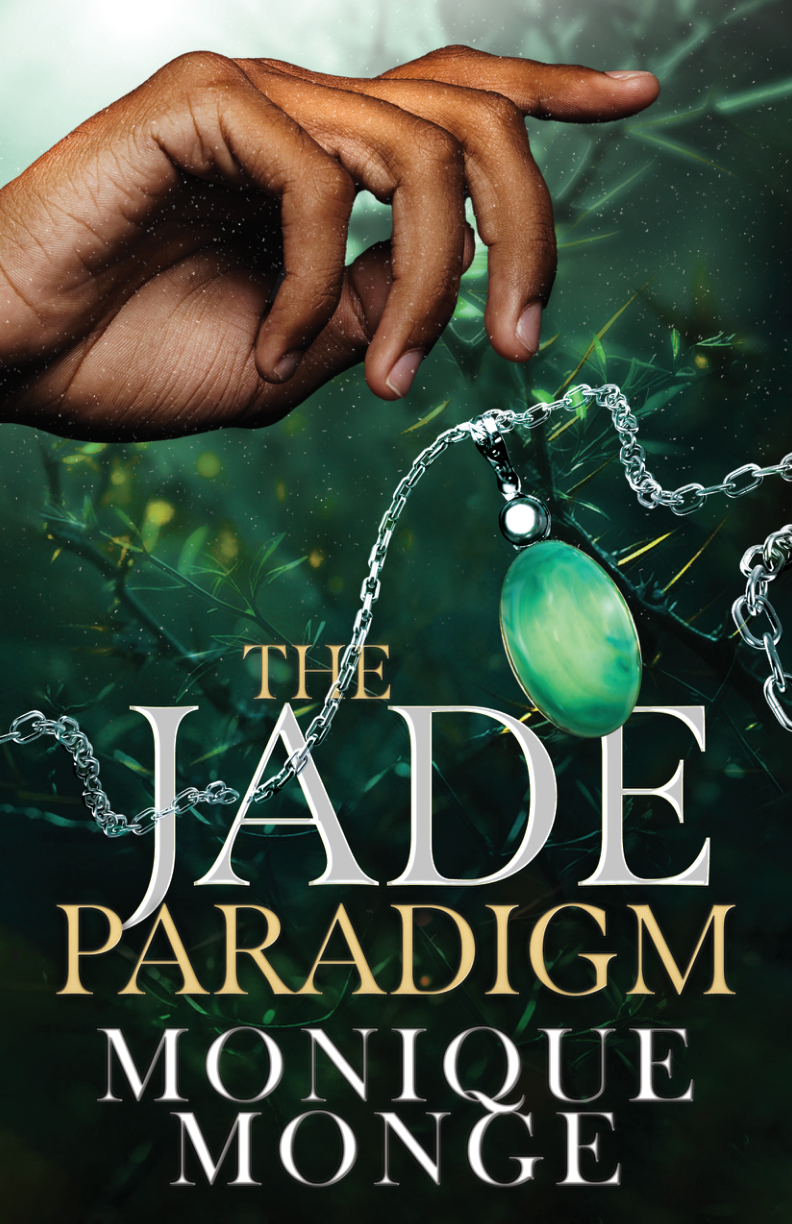
The Jade Paradigm
The debut memoir. A life shaped by family, survival, loss, and resilience.
Memoir, memory, and the conversations we carry home. Welcome to the writing world of Monique Monge.
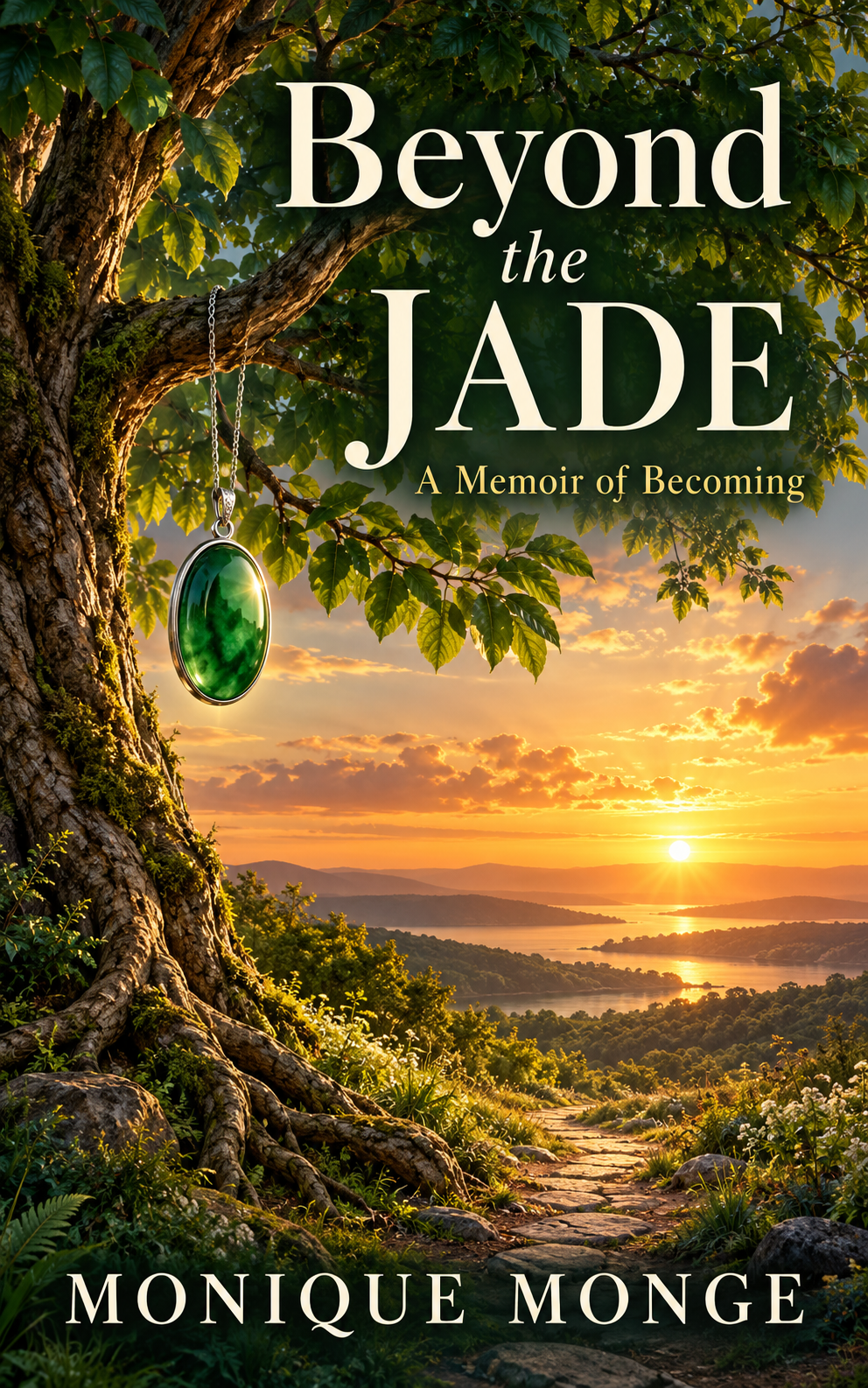
“I could open my hands without emptying my heart.”
From Beyond the JadeExplore the memoirs, pull up a chair for the kitchen-table stories, or make room for your own reflections.
The debut memoir. A life shaped by family, survival, loss, and resilience.
A Memoir of Becoming. Grief, family, faith, education, and the woman still unfolding.
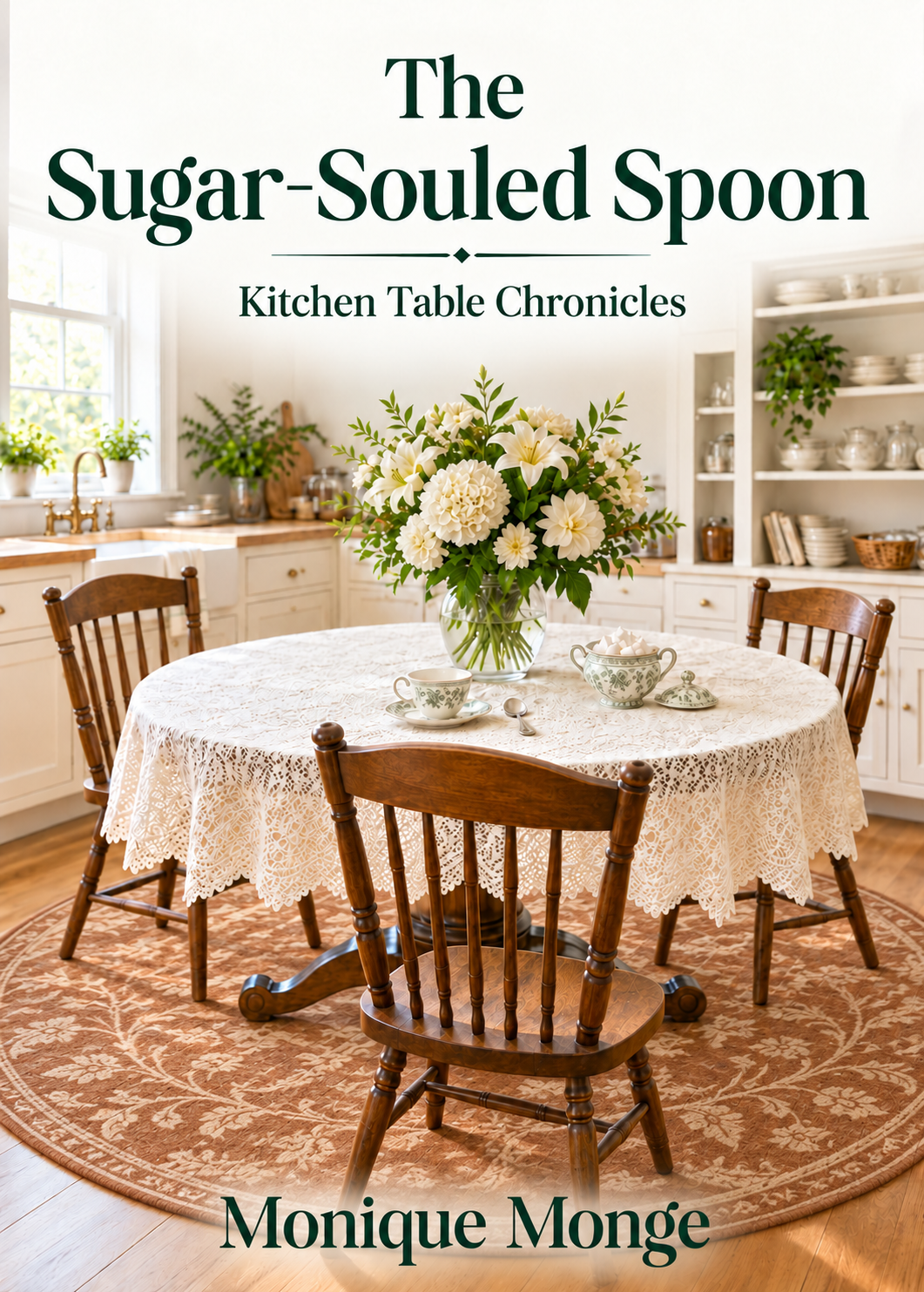
Kitchen Table Chronicles. Familiar voices, recipes, and memories that pull up a chair.
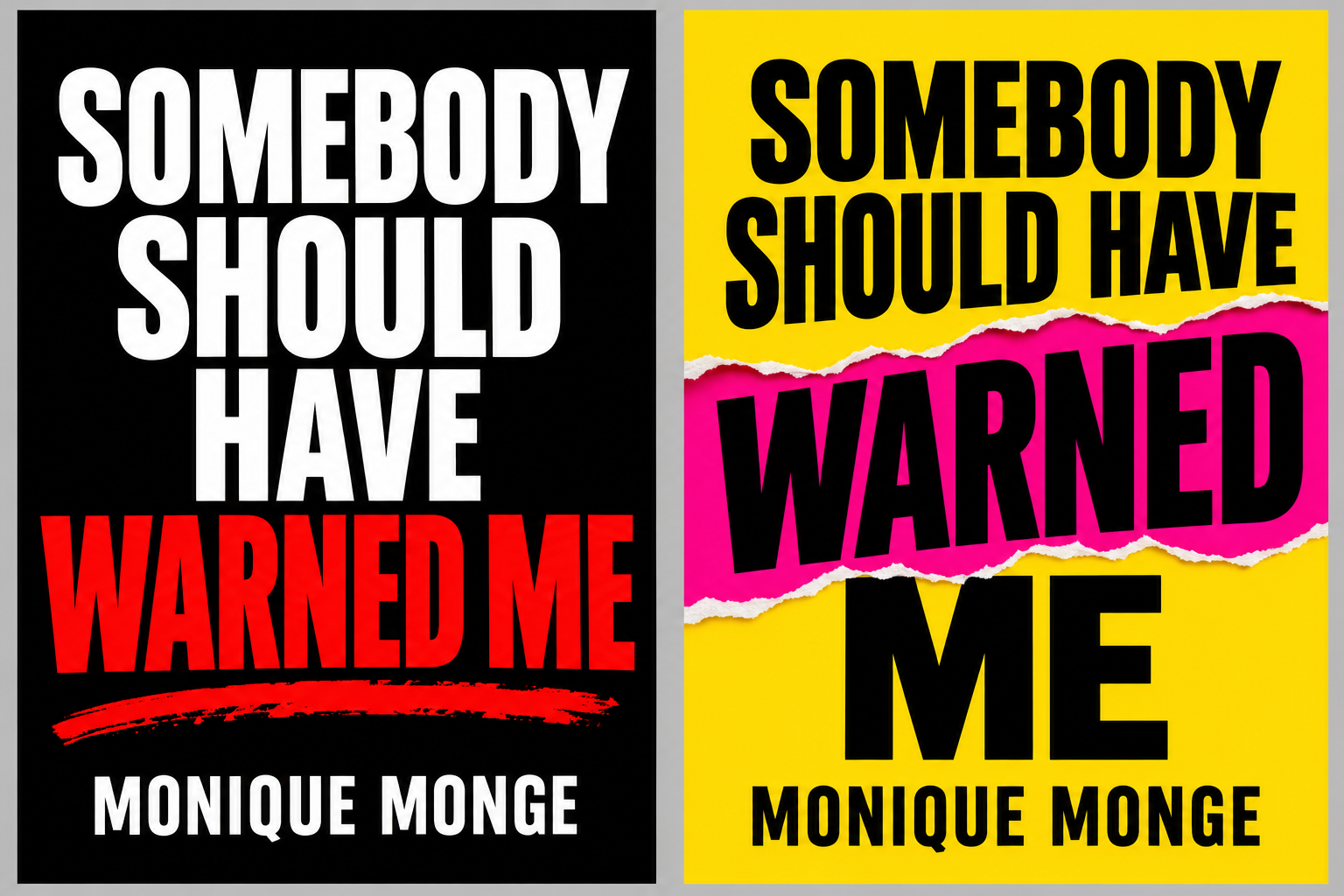
Frank conversations about menopause, told with humor and lived experience.
Thirteen chapters of reflection, with space for the story only you can tell.
Explore your journal ↗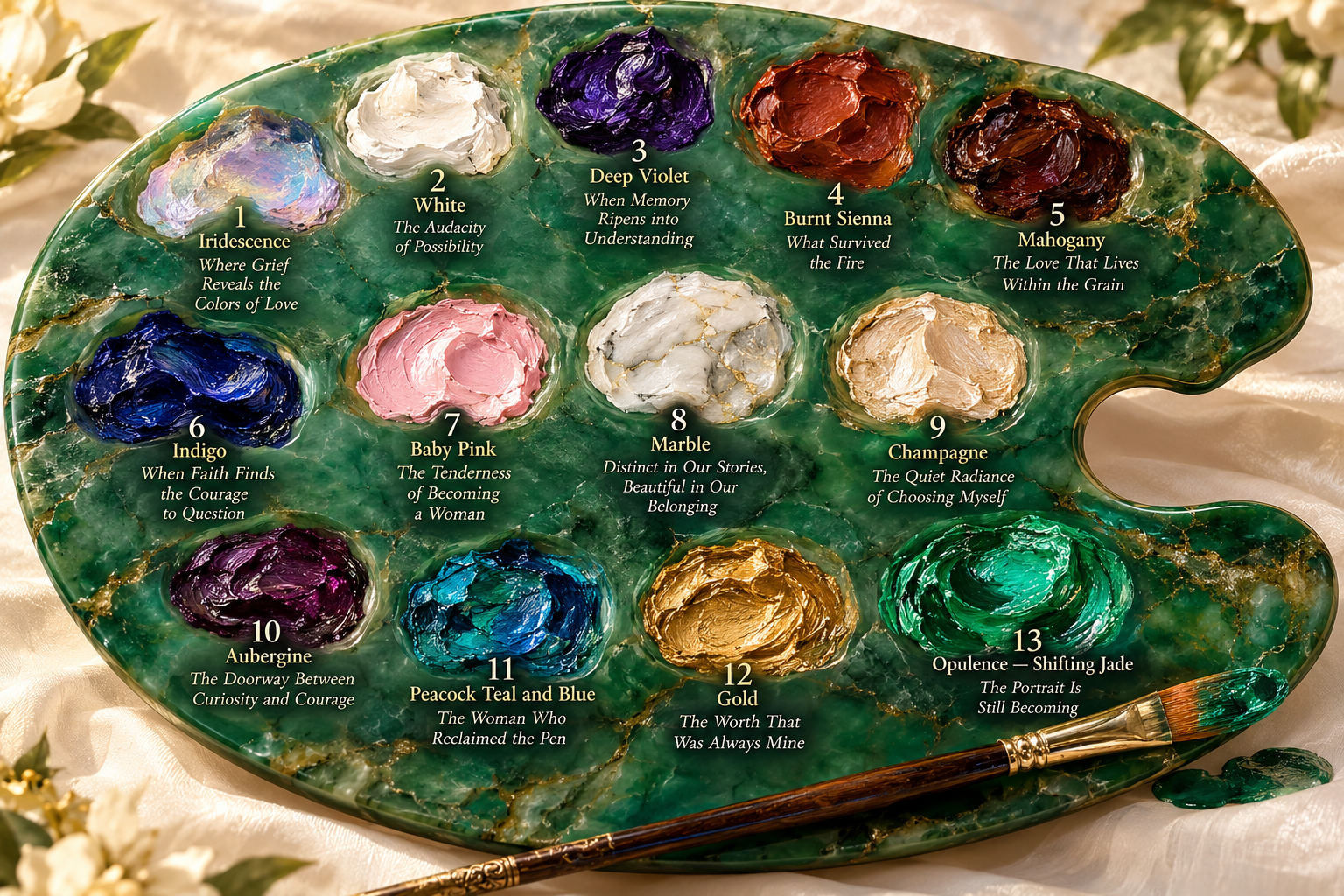
I have lived long enough to understand that no human life can be painted in a single color.
But a life, like a painting, cannot be understood by examining a single brushstroke.
I have lived long enough to understand that no human life can be painted in a single color.
Some colors entered my life with the tenderness of morning light, illuminating possibilities I had scarcely dared imagine. Others arrived bearing the weight of sorrow, staining the canvas with experiences neither innocence nor imagination could have prepared me to endure. Still others remained hidden beneath the surface, waiting for time to reveal what suffering alone could not teach.
For fifty-nine years, I have inhabited this unfinished portrait, sometimes mistaking the darkness of a particular season for the entirety of my existence.
But a life, like a painting, cannot be understood by examining a single brushstroke.
Iridescence held grief that would not stay one color. One turn, I held my newborn son; another, I heard the words that said he was gone. Yet laughter still rose from what we’d shared, catching me with its warmth before the ache returned. The light shifted. He remained my son in every shade.
White carried the audacity of possibility, reminding me that beginnings do not belong exclusively to the young or the unburdened. Deep violet revealed the woman beyond the title of mother, teaching me that love matures when we begin to recognize the humanity of those we once believed existed only in relation to ourselves.
Burnt sienna held the heat of betrayal alongside the warmth of remembered tenderness. Mahogany, rich with the grain of family, preserved the laughter that preceded loss and the complicated beauty of loving imperfect people.
Indigo emerged where certainty surrendered its authority, inviting me to question what I had inherited without dishonoring the sincerity with which I had once believed it.
Then came baby pink, carrying the delicate memory of girlhood and the extraordinary tenderness required to forgive ourselves for what we could not have known.
Marble taught me that belonging need not demand sameness. Champagne revealed a quieter brilliance, one that required neither celebration nor an audience to justify its existence.
Aubergine opened the doorway to intellectual awakening, where curiosity became courage and literature offered a language expansive enough to accommodate the woman I was becoming.
Peacock teal and blue placed the pen firmly within my grasp. No longer content to inhabit interpretations fashioned by others, I claimed the authority to narrate my own existence.
And gold, tempered by the unrelenting furnace of experience, illuminated a truth I had spent decades approaching: my worth had never been contingent upon marriage, motherhood, achievement, or another person's capacity to recognize it.
I had not survived all these years to become valuable.
I had survived long enough to recognize that I always was.
Opulence showed the richness still unfolding, freedom to reconsider, courage to begin again, and room to carry love through change. Turn a memory gently, and something new appeared, a life larger than I’d learned to see.
Yet beneath every pigment, through every alteration of light, there remained jade.
Not the unchanging green of an untouched stone, but something deeper, its beauty revealing itself through the shifting dimensions of experience.
Within its depths lived an opulence no material possession could rival: the wealth of consciousness, the freedom to reconsider, the courage to begin again, and the hard-earned wisdom to understand that loving another should never require the abandonment of oneself.
And woven through this extraordinary gathering of colours was a number.
Thirteen.
My mother entered the world on November thirteenth. Throughout my own life, the number appeared and reappeared, sometimes in the most ordinary of circumstances, as though quietly insisting upon its own remembrance.
But before it belonged to dates or the curious arithmetic of experience, thirteen belonged to a little girl.
A girl who still cherished her doll babies.
Who found delight in coloring books and the simple freedom of choosing which shade belonged where.
Who stood at the uncertain threshold between childhood and womanhood, unaware that the following year would fracture the innocence she had every right to keep.
For a long time, I remembered that girl through the shadow of what came afterward.
I measured her childhood against its interruption, allowing the violence of fourteen to obscure the wonder that had existed at thirteen.
But she was more than the prelude to her suffering.
She had a life before the wound.
A laughter before the silence.
An imagination that belonged entirely to her.
And now, after thirteen chapters, I find myself returning to that little girl, not to rescue her from a past that cannot be rewritten, but to acknowledge what the years had nearly persuaded me to forget.
She was already someone before the world began telling her who she ought to become.
Perhaps that is why the colors matter.
Not because every sorrow must yield a lesson, nor because every darkness conceals some necessary beauty. There are wounds for which no elegant metaphor can offer justification. There are losses that remain losses, regardless of the wisdom gathered in their aftermath.
But neither sorrow nor survival possesses the authority to define the entirety of a woman.
I no longer need to erase the darker pigments to recognize the richness of the portrait.
I need not force every contradiction into harmony.
Some colors resist one another. Others mingle unexpectedly, creating shades for which I have yet to discover a name.
And some remain beneath the surface, their presence known only to the woman who remembers laying them there.
I am the girl who dreamed.
The woman who endured.
The mother whose love learned to speak beyond language.
The student who dared to begin again.
The author who reclaimed the right to tell her own story.
I am not merely the sum of what happened to me.
I am also what I imagined, what I questioned, what I refused to surrender, and what I have yet to discover.
I am the canvas.
I am the artist.
And the little girl who once opened her coloring books, delighting in the possibilities held within a box of crayons, has finally come to understand something the years could neither diminish nor destroy.
The colors were always hers to choose.
The brush was always hers to hold.
And the portrait, the portrait is still becoming.
And perhaps, somewhere within the colors of my becoming, you will recognize a shade of your own.
For every life holds a palette.
And every portrait is still becoming.
Your reflections stay in your browser on your own device. They are not sent to Monique. Anyone using your browser may be able to read them. Download a copy to keep; clearing your browser data can erase saved writing.
A personal letter from Monique. Thirteen chapter invitations. Thirty-nine reflection questions, creative activities, and generous room to write.
Write by hand, draw, dictate, or come back another day. There is no single way to begin.
Try the reflection sample now. Full journal downloads and reader bonus details are still being prepared.
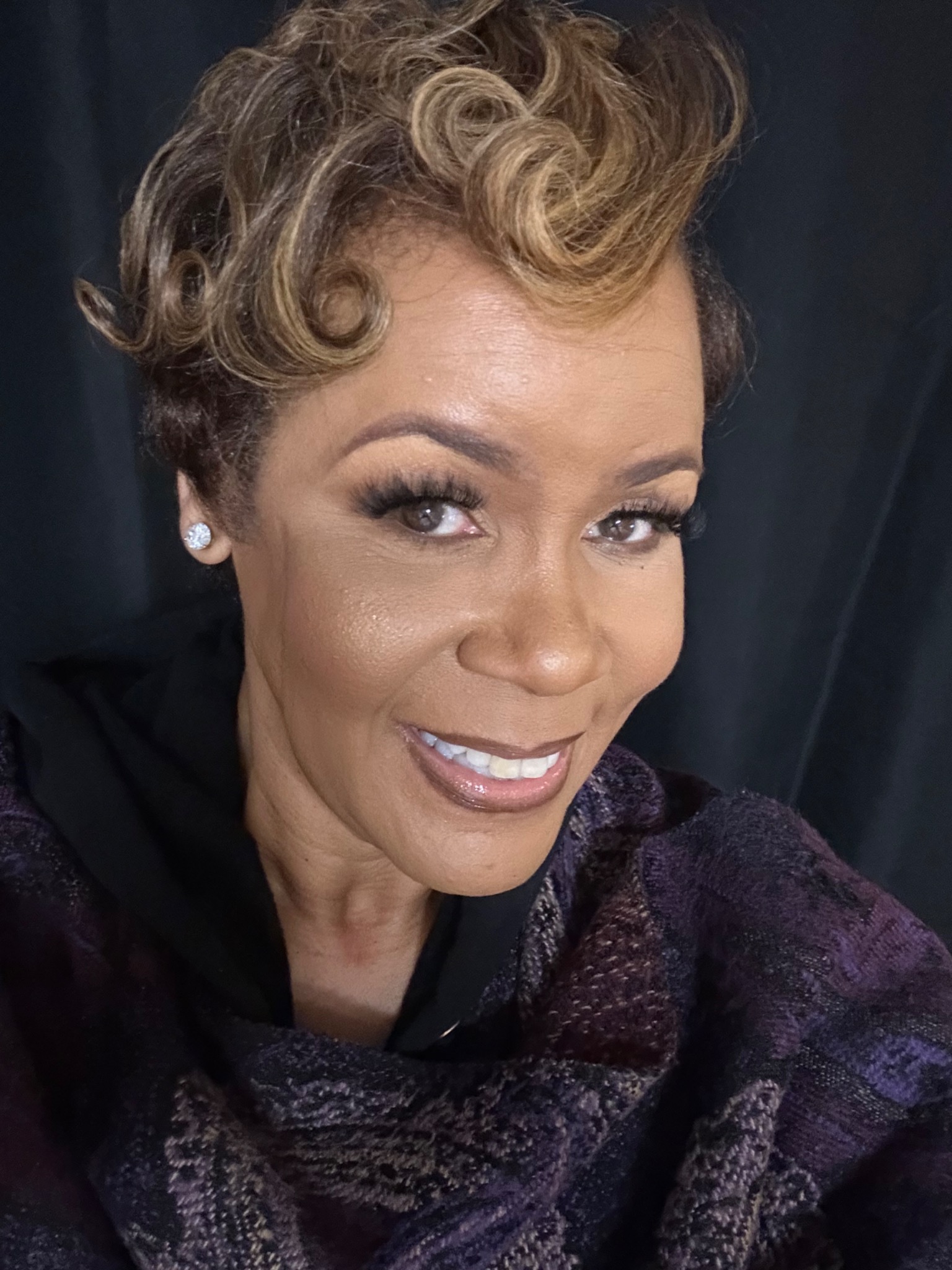
Monique Monge is the author of The Jade Paradigm. A Philadelphia native living in Georgia, she writes about family, memory, grief, resilience, and the continuing work of becoming.
Her writing makes room for both the intimate and the everyday: the stories that change a life and the kitchen-table conversations that help us live it.
A Philadelphia native now living in Georgia, Monique brings the perspective of a mother, caregiver, storyteller, and lifelong learner. Her experience with vision loss informs her commitment to making space for different ways of reading, reflecting, and participating.
As a Pauline E. Drake Scholar at Spelman College, she has continued her study of sociology. Education, identity, family, and the freedom to reconsider what we have inherited move through her writing.
Her memoirs use color and memory to explore the experiences that shape a woman and her continuing right to become. Her Kitchen Table Chronicles bring that same attention to the everyday voices, food, and rituals that make a home.
Book-club conversations, meet-the-author gatherings, and book signings. Tell Monique what you have in mind.
Reflections on becoming, new books and journals, and stories from the kitchen table. Occasional emails, with room to unsubscribe anytime.
If the form does not appear, open the signup form.
Keep Monique’s books and stories close. Add this app to your phone.